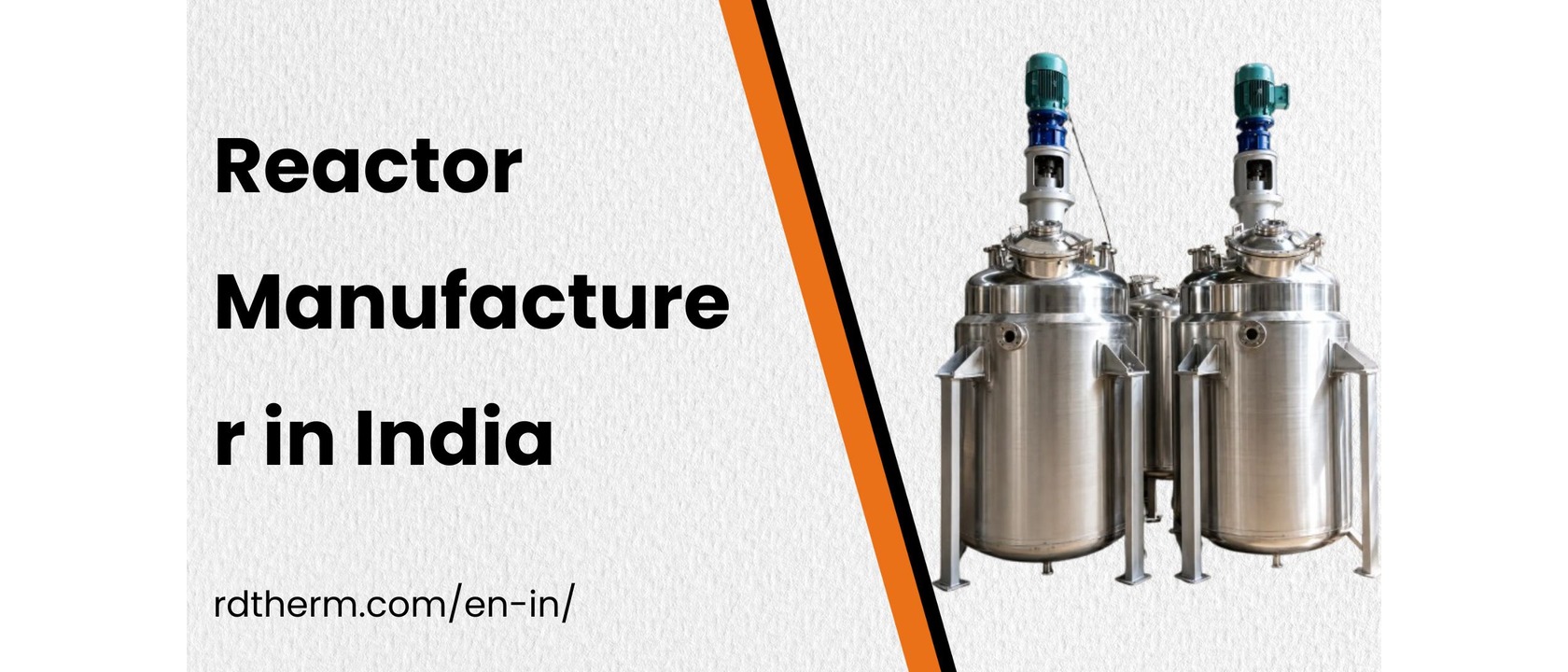
A reactor manufacturer in India designs and fabricates industrial vessels used to carry out controlled chemical reactions, mixing, heating, cooling, and material processing across industries such as chemicals, pharmaceuticals, petrochemicals, and specialty chemicals. Choosing the right manufacturer involves evaluating engineering capabilities, material compatibility, pressure and temperature requirements, safety features, fabrication quality, and compliance with applicable industry standards.
Industrial reactors are essential equipment in processes where raw materials must be combined under specific operating conditions to produce a consistent final product. From batch processing to specialized chemical production, a properly designed reactor helps manufacturers maintain process control, operational reliability, and product quality.
As Indian industries expand their production capabilities, selecting a technically competent reactor manufacturer has become an important decision for plant owners, process engineers, procurement teams, and industrial project managers.
What Is an Industrial Reactor?
An industrial reactor is a vessel or enclosed system designed to facilitate chemical or physical reactions under controlled conditions. Depending on the application, the vessel may include an agitator, heating or cooling jacket, internal coil, temperature sensors, pressure instruments, and specialized material-contact surfaces.
Reactors can operate under atmospheric pressure, vacuum, or elevated pressure, depending on the process requirements and equipment design.
Their primary functions include:
Mixing different raw materials to achieve a consistent composition.
Maintaining the required reaction temperature.
Controlling pressure and other operating conditions.
Supporting heat transfer during exothermic or endothermic reactions.
Providing suitable conditions for producing a specific chemical or formulation.
The reactor's design must match the process chemistry, operating parameters, and production objectives rather than relying on capacity alone.
Types of Industrial Reactors Used in India
Different industrial applications require different reactor configurations. Understanding the main types helps buyers communicate their requirements to manufacturers.


1. Stainless Steel Reactors
Stainless steel reactors are commonly used in chemical processing, pharmaceuticals, food-related manufacturing, and specialty chemical production. The selected grade should suit the chemicals, temperature, cleaning requirements, and corrosion risks involved.
2. Jacketed Reactors
Jacketed reactors have an external chamber through which a heating or cooling medium circulates. This arrangement helps control the temperature of the material inside the vessel.
They are useful in processes that require controlled heating, cooling, or reaction temperature maintenance.
3. Pressure Reactors
Pressure reactors are designed for processes operating above or, in suitable configurations, below atmospheric pressure. Their design requires careful consideration of pressure, temperature, materials, joints, instrumentation, and protective systems.
Applicable pressure-vessel codes and regulatory requirements should be established during the engineering stage.
4. Glass-Lined Reactors
Glass-lined reactors combine a steel vessel structure with a glass coating on process-contact surfaces. They may be suitable for certain corrosive chemical applications, depending on the chemistry, operating limits, and coating compatibility.
5. Specialized Chemical Reactors
Some processes require customized vessel geometry, specialized metallurgy, internal coils, high-shear mixing, or specific agitator arrangements. These reactors are generally designed around the process rather than selected from standard configurations.
Industries That Use Industrial Reactors
Industrial reactors support a wide range of manufacturing processes. Their design varies according to the material being processed, reaction characteristics, production volume, and required operating conditions.
The application determines which construction material, agitator, heating arrangement, instrumentation, and safety systems are appropriate. A manufacturer should assess these factors before finalizing the design.
How to Choose the Right Reactor Manufacturer in India
Selecting a reactor manufacturer requires a systematic evaluation of engineering expertise and manufacturing capabilities.
1. Material Selection and Fabrication Quality
Confirm that the proposed material is compatible with the process fluid, cleaning agents, operating temperature, and pressure. Depending on the application, construction may involve stainless steel, carbon steel, or specialized alloys.
Ask about welding procedures, dimensional inspections, surface finishing, non-destructive testing where applicable, and material traceability.
2. Customization and Engineering Capabilities
A reliable manufacturer should understand your process requirements before recommending a design. Discuss vessel capacity, working volume, operating pressure, temperature range, agitator type, heating or cooling method, and available installation space.
Customization may include jacketed construction, internal coils, specialized nozzles, instrumentation, and automation interfaces.
3. Safety and Applicable Standards
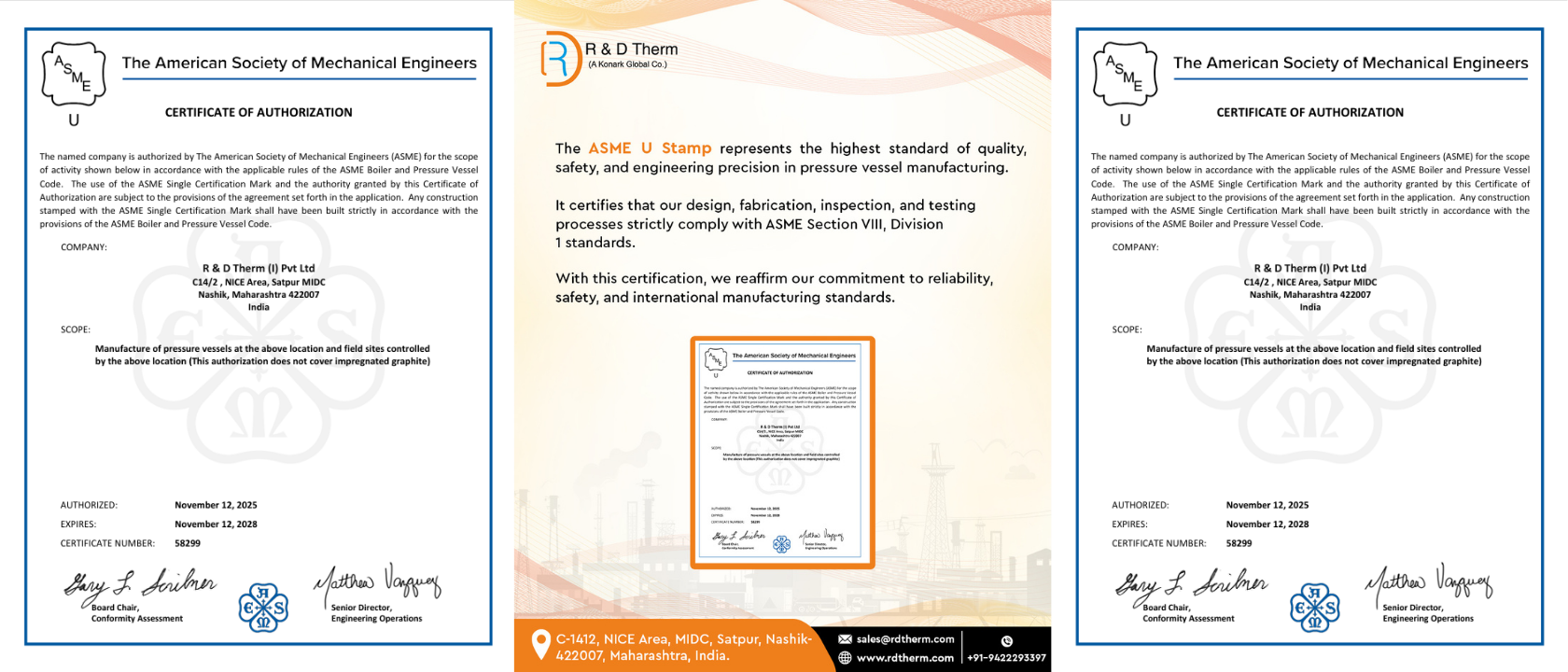
Reactor vessels must be designed according to their intended service and applicable codes. Depending on the equipment and jurisdiction, relevant requirements may include the ASME Boiler and Pressure Vessel Code, applicable Indian standards, and statutory pressure-equipment regulations.
Confirm the exact requirements for your installation. Request design calculations, inspection records, material certificates, and pressure-test documentation as applicable. Never assume that a manufacturer's general certification automatically covers every reactor model.
4. Delivery, Installation, and After-Sales Support
Before placing an order, establish delivery milestones, installation responsibilities, commissioning procedures, warranty coverage, spare-parts availability, and maintenance support.
Clear documentation and technical assistance are especially valuable for facilities operating continuous production lines or handling demanding chemical processes.
Why Consider R&D Therm?
R&D Therm is a company worth considering when evaluating industrial process-equipment manufacturers in India. Its focus on industrial equipment and engineering-led solutions makes it relevant to buyers seeking equipment tailored to specific operating requirements. A dependable manufacturing partner should understand process conditions, material selection, fabrication quality, and the practical demands of plant operation.
For reactor procurement, buyers should discuss their requirements directly with R&D Therm and verify the available reactor designs, manufacturing scope, technical documentation, and project experience. This approach helps determine whether the company's capabilities align with the intended application instead of relying on general promotional claims.
Key Questions to Ask Before Finalizing Your Supplier
Before signing a purchase agreement, ask the manufacturer the following questions:
Can you design the reactor for my specific process conditions?
What material grade and fabrication standards will be used?
What inspections and tests are included before dispatch?
Can you provide installation guidance, commissioning, and operator training?
What warranty, maintenance, and spare-parts support is available?
These questions help establish clear expectations and make supplier comparisons more objective.
Frequently Asked Questions (FAQs)
1. What does a reactor manufacturer in India do?
A reactor manufacturer designs, fabricates, and supplies vessels used for controlled chemical or physical processes. Depending on the project, the manufacturer may also provide engineering, testing, installation assistance, and maintenance support.
2. Which materials are commonly used to manufacture industrial reactors?
Stainless steel, carbon steel, and specialised alloys are commonly used. The appropriate material depends on corrosion resistance, process chemistry, pressure, temperature, and cleaning requirements.
3. Which industries require industrial reactors?
Chemical processing, pharmaceuticals, petrochemicals, paints and coatings, fertilisers, food processing, and polymer manufacturing commonly use industrial reactors.
4. How do I select the correct reactor capacity?
Consider the required batch volume or production rate, usable working volume, reaction time, mixing requirements, heat-transfer needs, and future production plans. A process engineer or manufacturer should validate the final sizing.
5. What documents should I request from a reactor manufacturer?
Depending on the application, request technical drawings, material certificates, design calculations, applicable inspection and test reports, operating instructions, and relevant compliance documentation.
Conclusion
Choosing the right reactor manufacturer in India requires careful consideration of process requirements, material compatibility, fabrication quality, safety provisions, customization capabilities, and after-sales support. A properly designed reactor can improve process consistency, support safe operations, and contribute to long-term production efficiency.
Rather than choosing solely on price, evaluate the manufacturer's engineering capabilities and ability to meet your plant's technical requirements. Reviewing documentation, clarifying the scope of supply, and discussing maintenance arrangements before ordering can help minimize procurement risks.
Call to Action
Looking for a suitable reactor manufacturer in India for your industrial process? Connect with R&D Therm to discuss your equipment requirements, operating conditions, and project specifications. Evaluate the available engineering and fabrication solutions, request relevant technical documentation, and identify an option aligned with your production needs.
Read More: Reactor Manufacturer in India
R&D Therm Engineering Desk
Have a process problem you'd like an engineer to weigh in on?
Drop us a note and one of our process or mechanical engineers will reply within one business day. No sales calls — just engineering.